
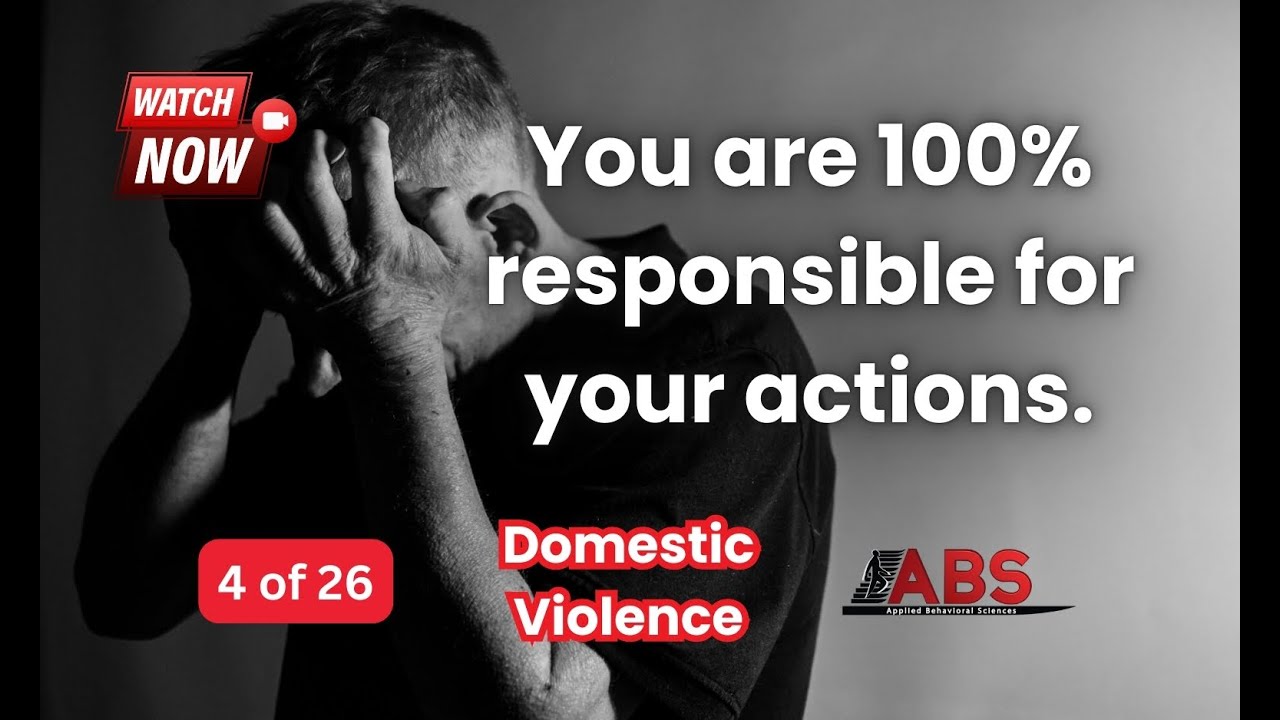
You Are 100% Responsible for Your Actions | Accountability in Domestic Violence (Ep. 4)
Blame can feel convincing. “He made me angry.” “She pushed me too far.” “They started it.” These statements often appear in conflict, especially in situations where emotions run high. But when we look closely, they reveal something important. They shift responsibility away from the person who acted. That shift is not accountability. It’s deflection.
Real change begins when responsibility returns to where it belongs.
The truth about personal responsibility
No one else controls your behavior. People can frustrate you. They can disagree, provoke, disappoint, or challenge you. Those experiences may trigger strong emotions. But emotions are not the same as actions.
Your response is still your choice. Behavioral psychology repeatedly shows that there is always a moment between what happens to us and how we react. That moment may be brief, but it exists. In that space lies the ability to pause, reflect, and choose a different response. Without recognizing that space, change becomes nearly impossible.
Why blaming others feels easier
Blame is tempting because it removes discomfort. If someone else “made” you react, then the responsibility belongs to them. There is no need to reflect. No need to examine habits or patterns. No need to grow.
But that approach comes with a cost. When people blame others for their reactions, they also surrender their ability to improve them. The power to change disappears the moment responsibility is handed away. Accountability restores that power.
What accountability actually means
Accountability is not about shame or punishment. It is about clarity. It means recognizing that your actions belong to you, regardless of the circumstances surrounding them.
Situations that often trigger strong reactions include:
- A partner disagreeing during an argument
- A coworker challenging your ideas
- A teenager refusing to listen
- A stranger behaving rudely
These situations can be frustrating, even infuriating. But none of them force a specific response. A person may feel angry, but anger does not require yelling. Frustration does not require intimidation. Conflict does not require harm.
Reclaiming your ability to change
The moment someone accepts responsibility for their behavior, something important shifts. They regain control. Instead of saying, “They made me do it,” the focus becomes, “I chose that reaction, and I can choose differently next time.” That mindset opens the door to real growth.
Accountability turns attention inward. It encourages reflection, learning, and adjustment. Without accountability, patterns repeat. With accountability, change becomes possible.
A foundation for healthier relationships
Healthy relationships depend on personal responsibility. When individuals own their actions, communication improves. Conflicts become opportunities for understanding rather than escalation. Respect grows because each person recognizes their role in shaping the relationship.
Accountability is not a weakness. It is maturity. And when people accept full responsibility for their behavior, they take the most important step toward building safer, healthier relationships, both for themselves and for everyone around them.
Related Posts
What Is Domestic Violence? Change Begins with Truth Ep. 1
Sometimes the hardest sentence to say is a simple one: “I hurt someone.” Many...
3 Reasons You Must Stop Justifying Your Anger – EP 5 Domestic Violence Series
Anger has a strange way of disguising itself as righteousness. It tells people...